Swinda Oelke
Signal, 2024
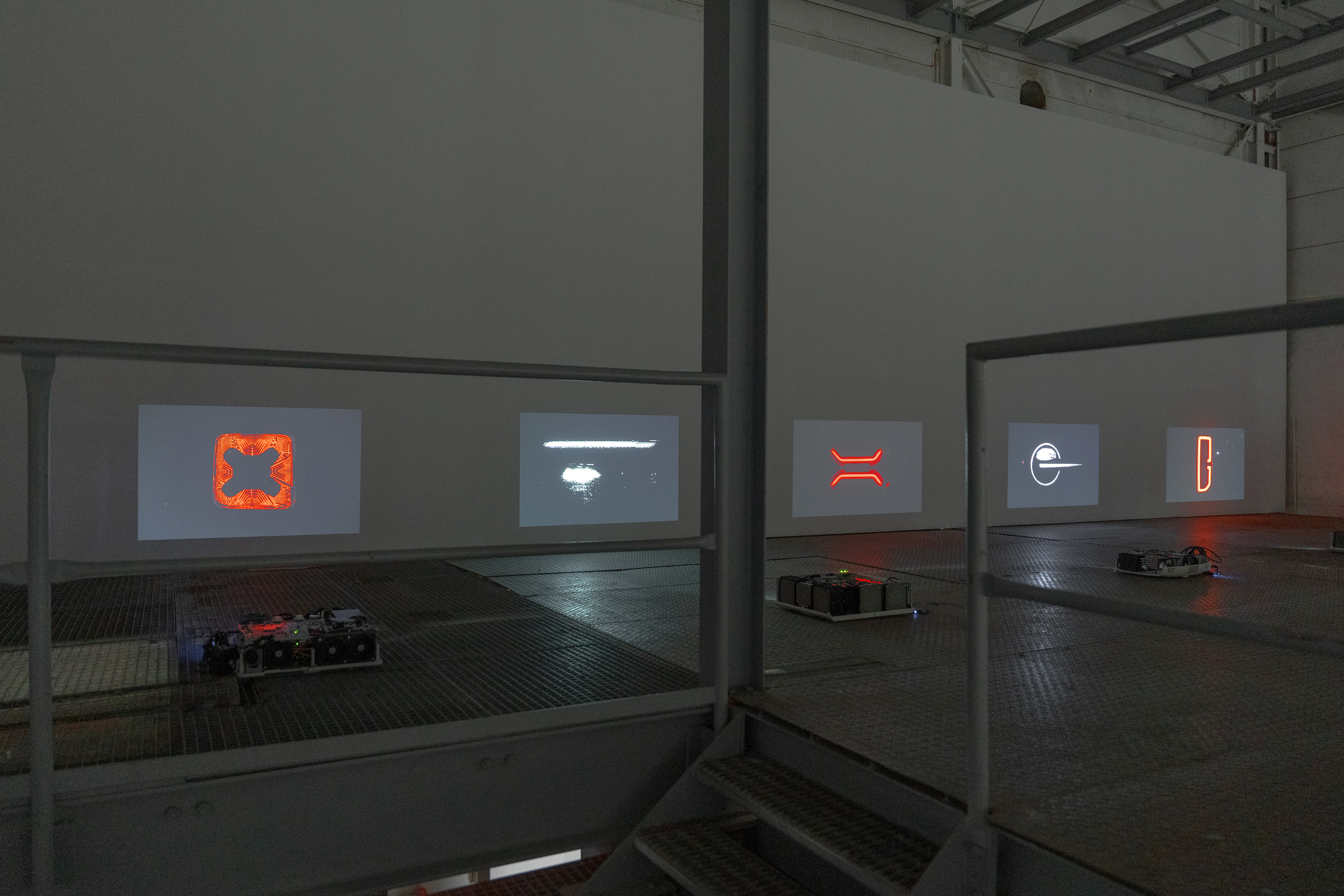
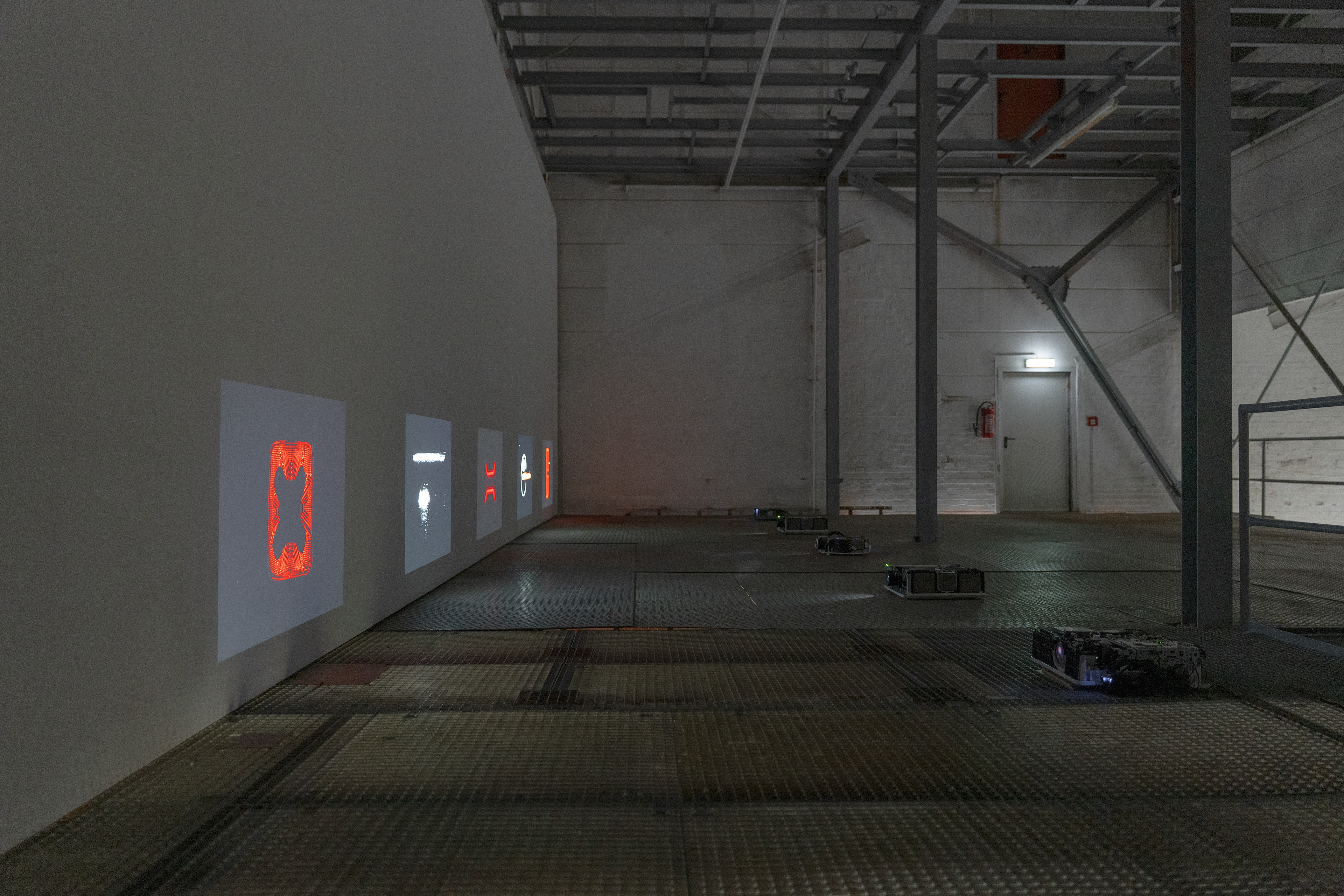
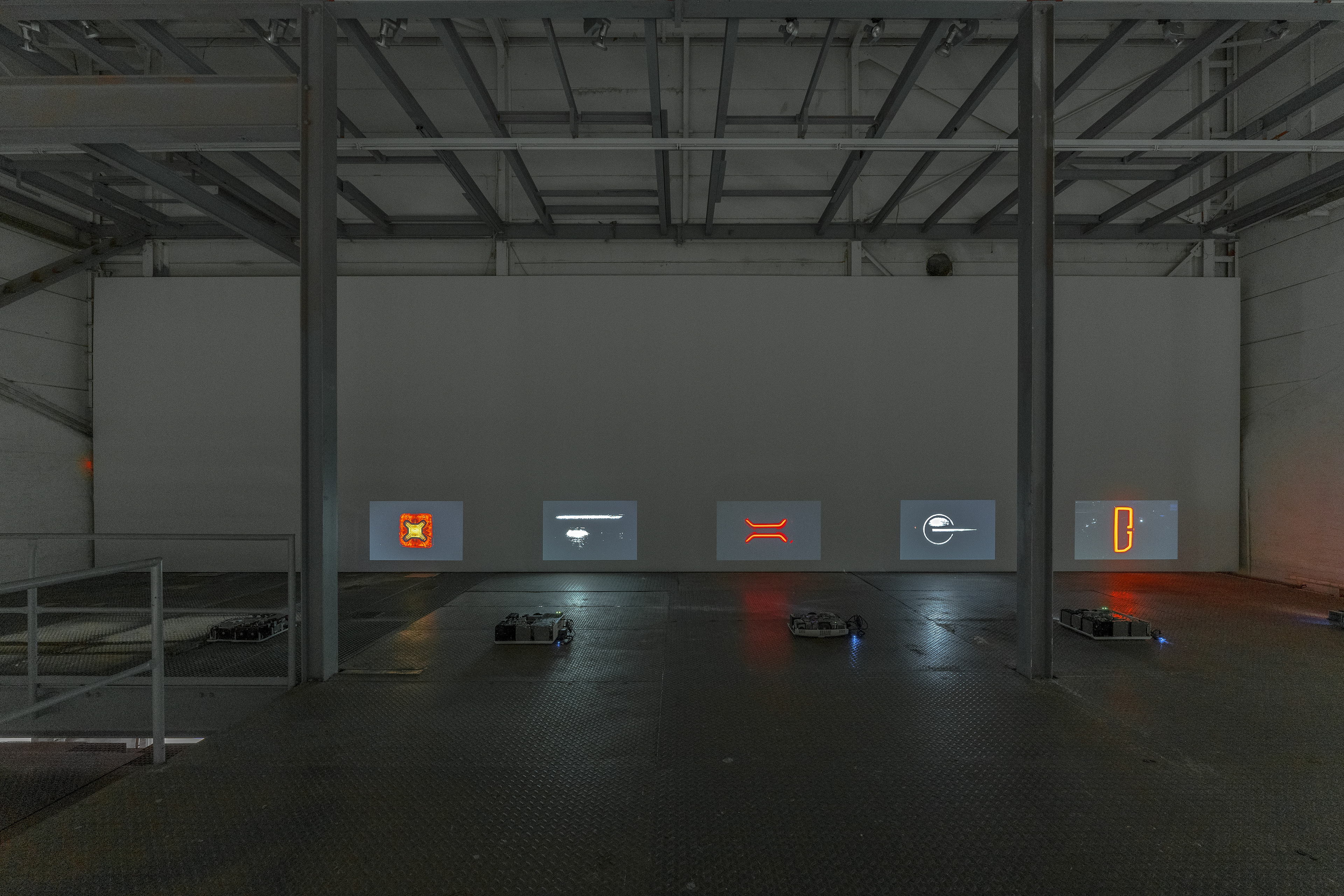
7 videos, disassembled projector, cables, media player
exhibition views: Signal, MMIII - Kunstverein Mönchengladbach
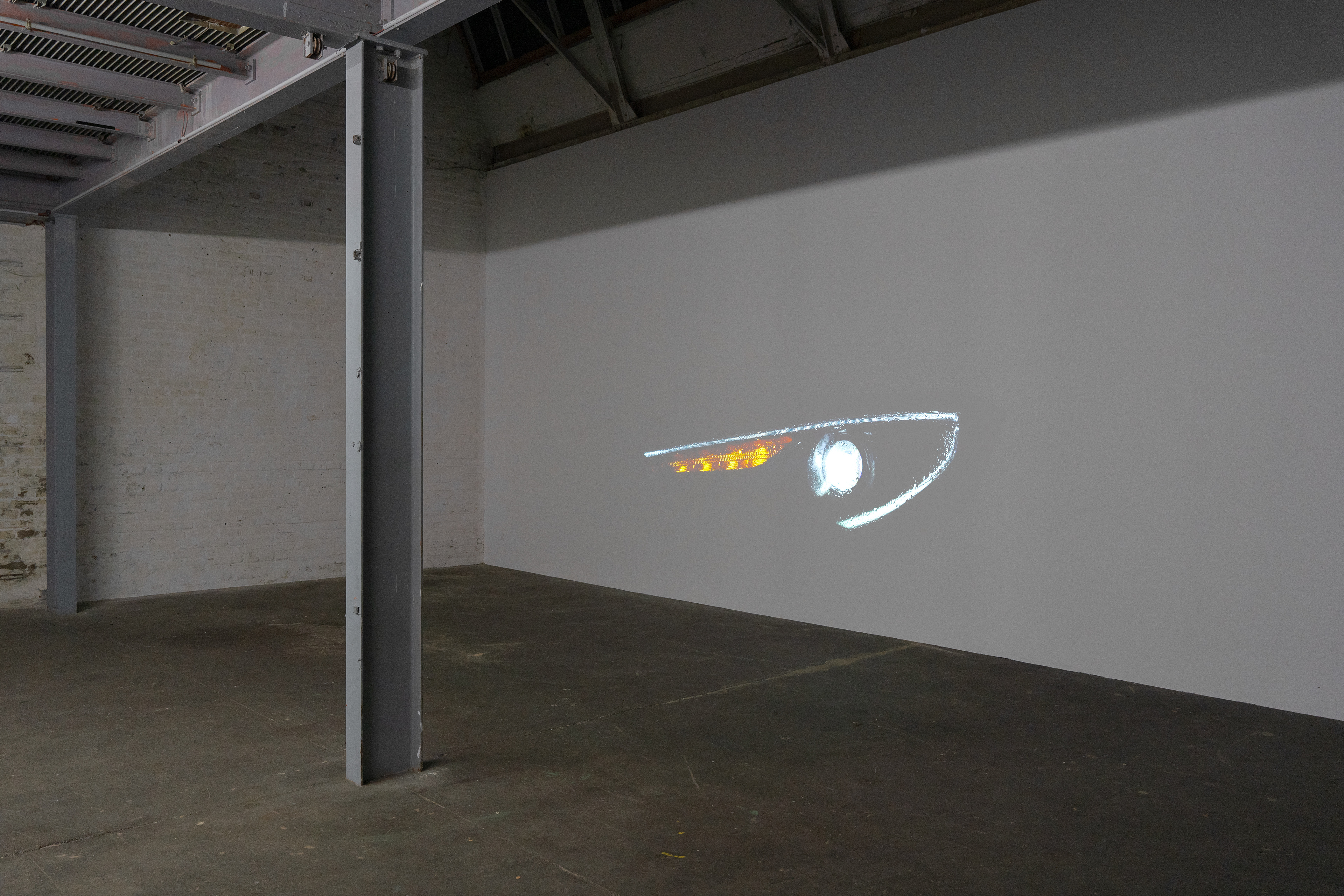
(...) Based on the surroundings of the Kunstverein, which is located in an industrial area and surrounded by car dealerships, Oelke takes up the motif of the car. In the videos shown, the artist explores the car as a highly charged symbol that forms a complex network of varying connotations while also functioning as an instrument for the symbolic construction and habitual reproduction of social gender and class. Seven videos are on display, depicting various headlights and taillights of new cars that flash in different shapes, colours and rhythms. In traffic, these signals serve to communicate between drivers.
(...) For Oelke, vehicle lights are not only safety-related signals, they also function as a means of communicating a situationally dependent language code: a series of light signals that can be understood and perceived in different ways. A high beam, for example, can be used to express a friendly thank you or an attentive beware, but it can also – often as a way of staging hegemonic masculinity – indicate an aggressive act, such as a flashing light in combination with tailgating. The car thus not only embodies characteristics that are often considered stereotypically male – power, control, risk, independence – but also facilitates these characteristics to be externalised. In Signal, Oelke isolates this means of communication in order to remove it from a concrete reading. The videos never depict the entire car, instead only its lights: rhythmically pulsating flashes, glowing lines, and abstract forms. Briefly, they seem to lose their affiliation to headlights until they become recognisable and classified as such. Due to the fact that all videos have different durations, a temporal shift occurs between them. This creates a continuously changing choreography in the space among the projections, which is fundamentally determined by chance. By taking the element of chance into consideration, Oelke’s work becomes an autonomous construct that takes on a mediating role. She merely defines the starting point and awards an agency to the objects in her works, giving them space to enter into a dialogue with each other and with the viewers.
Text: Marie-Luiza Georgi (Translation: Lucy Nixon)