Swinda Oelke
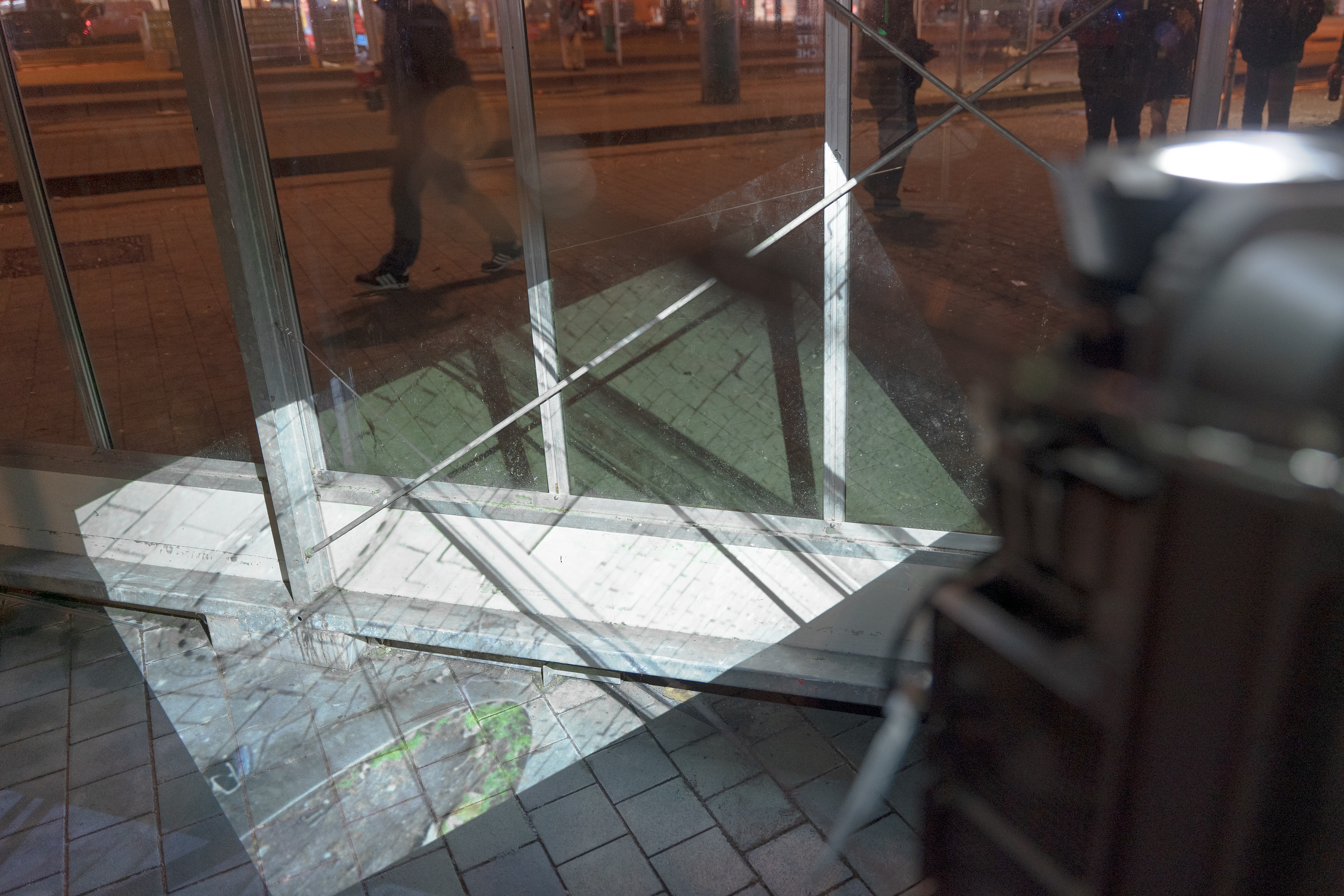
Node, 2024
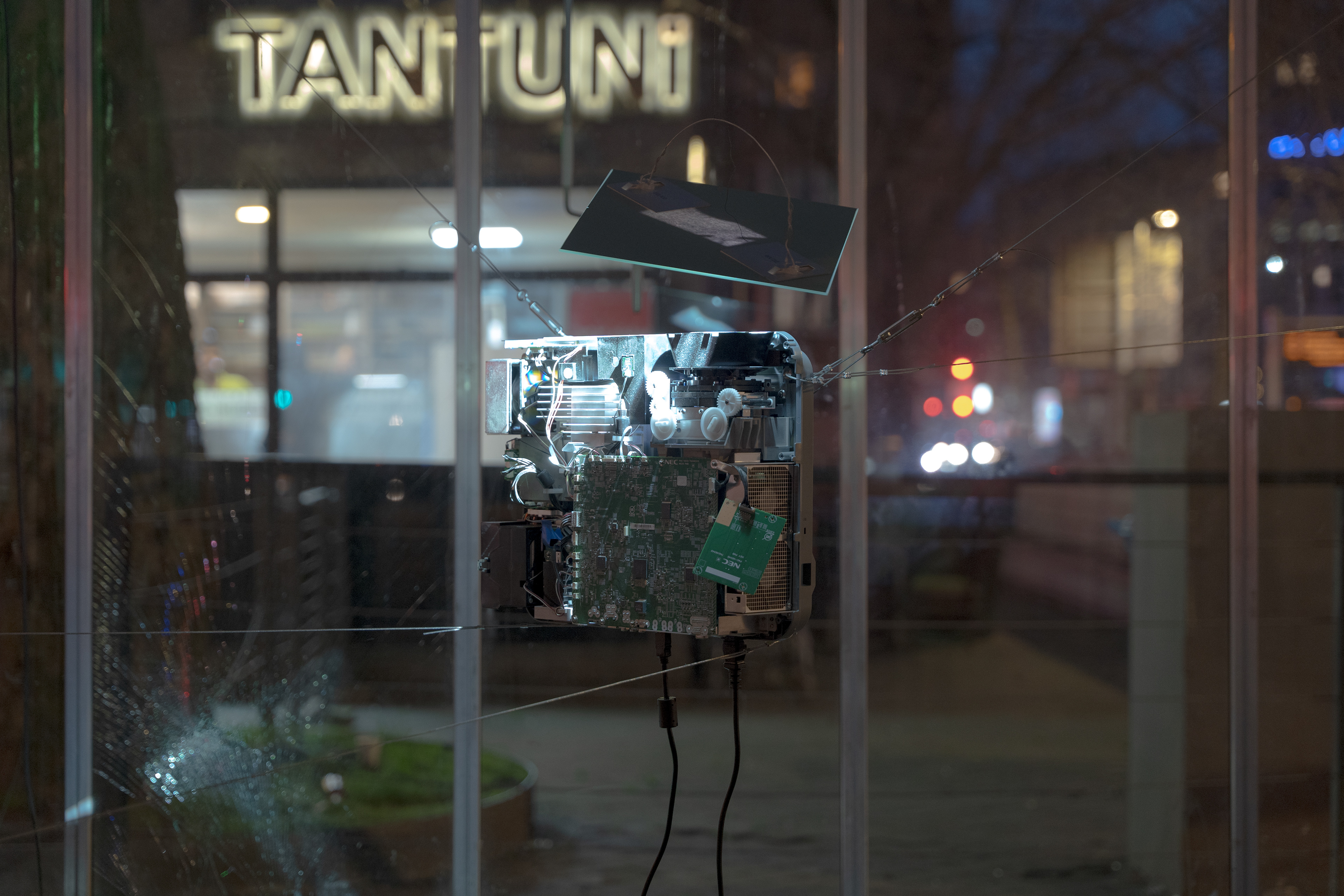
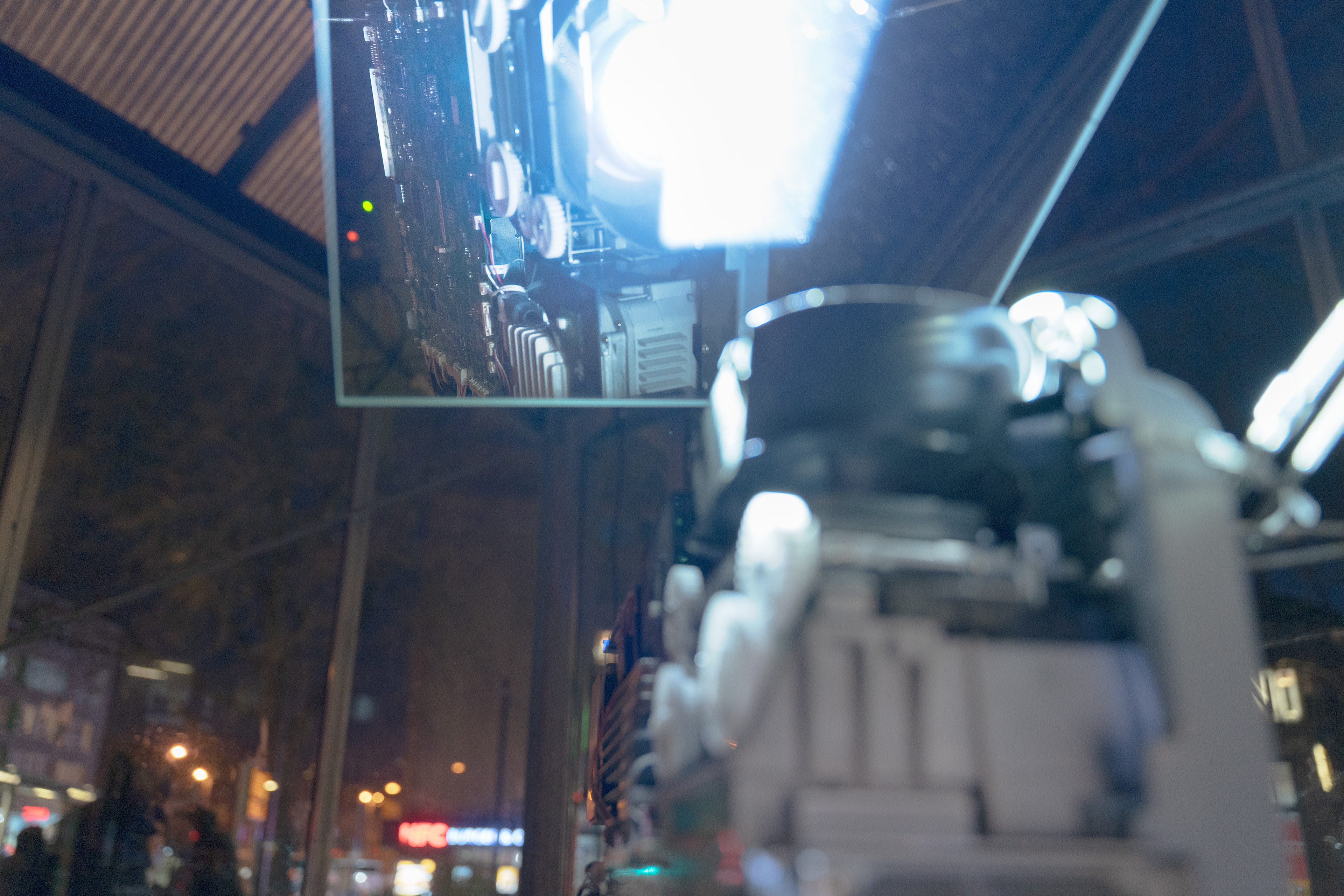
Video, disassembled projector, mirror on string, steel cables, cable clamps, cables, media player
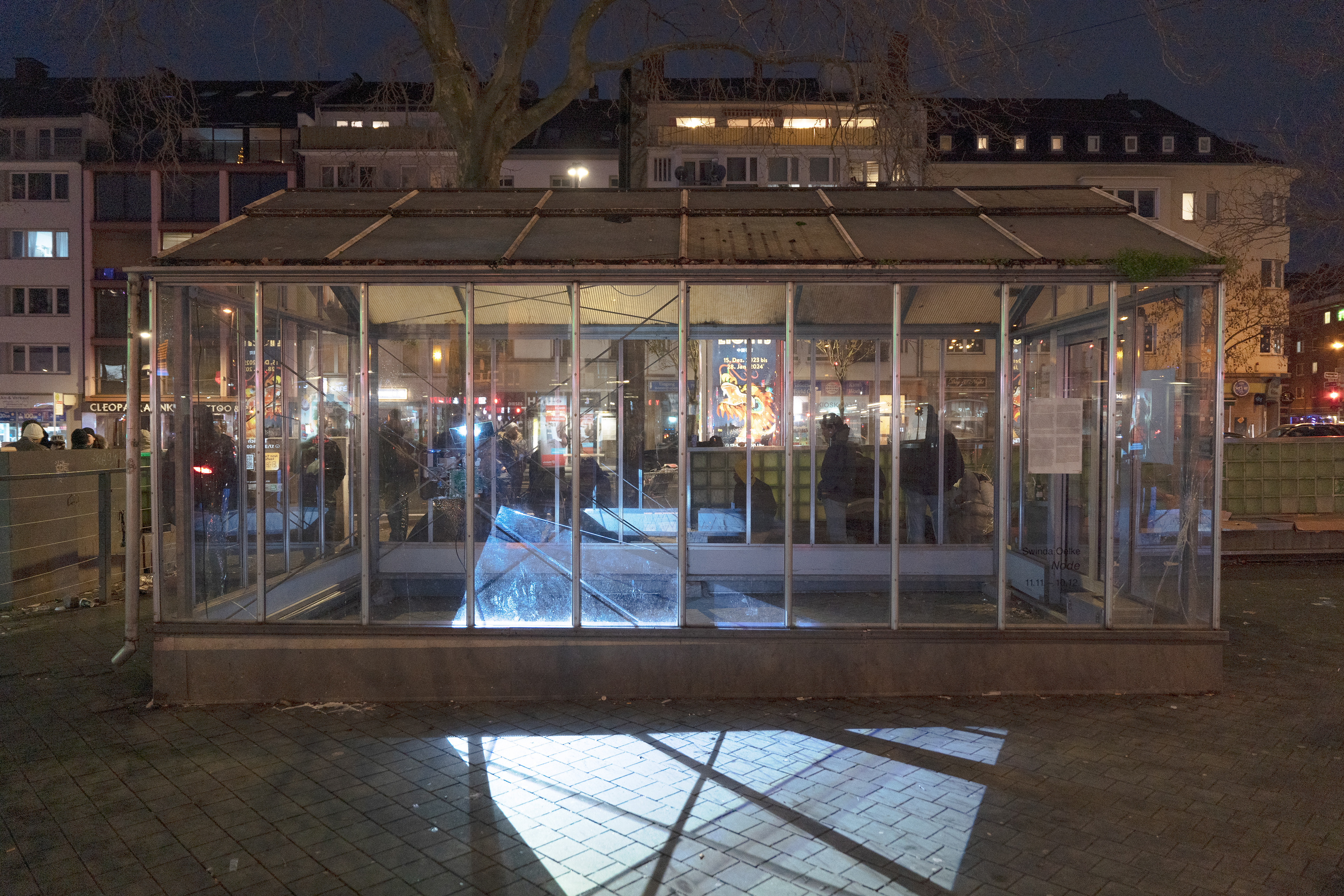
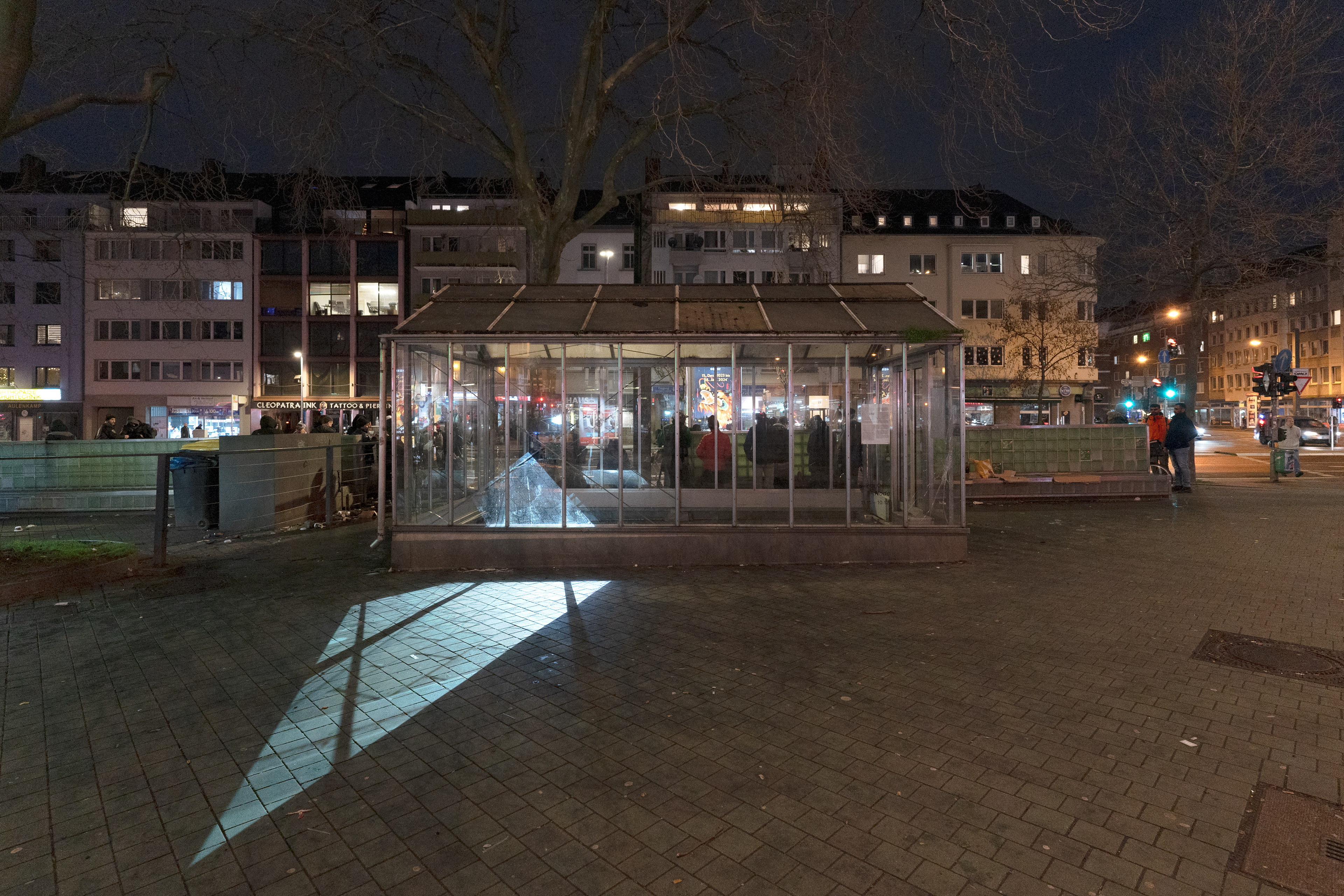
exhibition views: Node, Palace - Worringerplatz, Düsseldorf
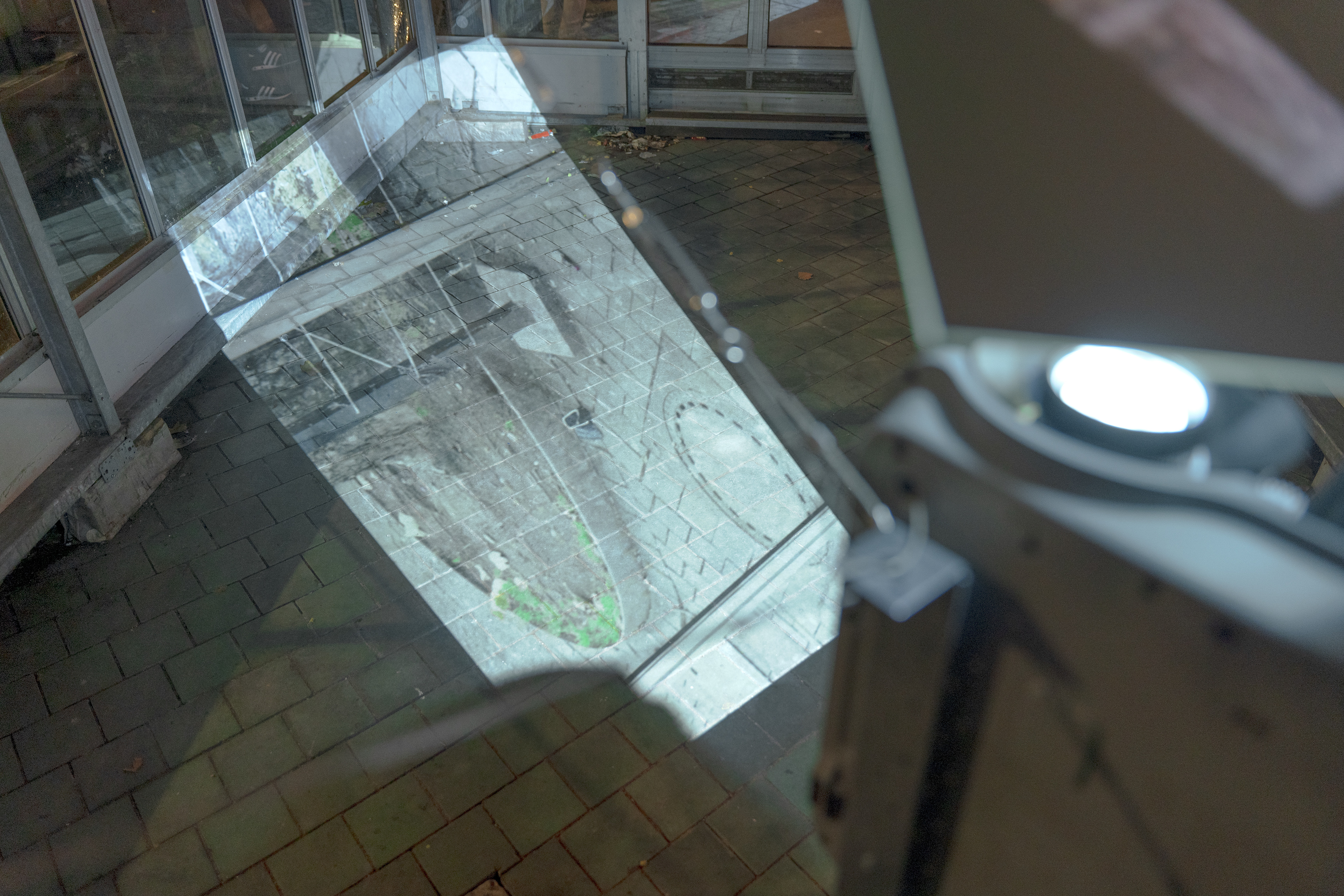
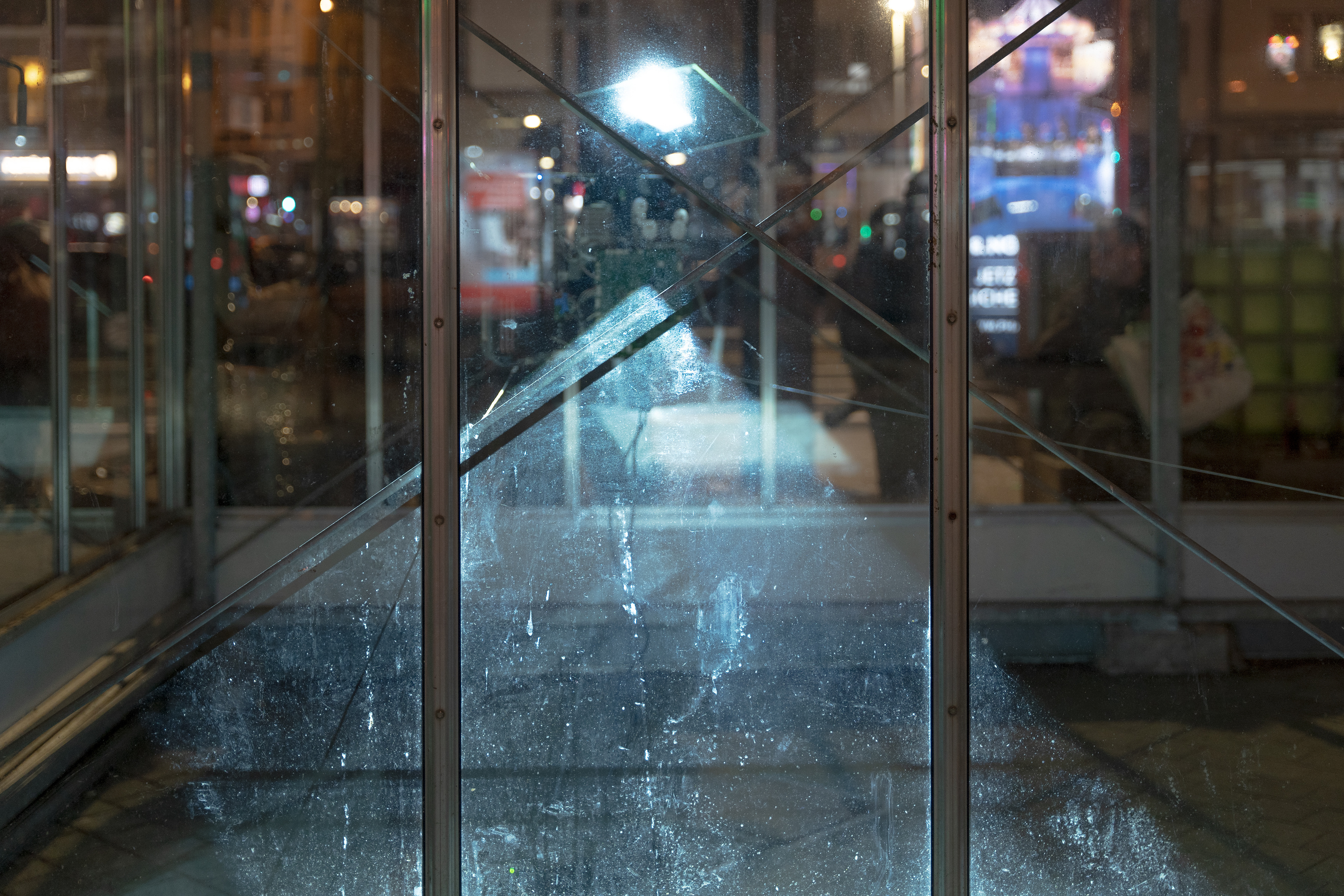
The exhibition Node also refers to the immediate surroundings of its exhibition site. Worringer Platz in Düsseldorf is a central traffic junction in the city. It is close to the central station, crossed by several train and bus lines and surrounded by busy roads. The intercity bus station is directly adjacent. Next to a snack bar at the centre of the square – which can hardly be perceived as such anymore due to the amount of streets, rail tracks, and stops – there is a glass house that is used as an exhibition space for contemporary art. Oelke presented a work here that uses chance as well as raising questions regarding the surveillance and use of public space. In addition to its infrastructural purpose, Worringer Platz has become a place where homeless people and those suffering from drug addiction gather. These people are continually forced out of other places in the city. Here, however, they are continually subjected to state surveillance in the form of CCTV and the presence of the police. The video sculpture developed for this site subtly occupies the space of the glass house – a video of the surroundings of the glass house shows the paved floor, which the square and the exhibition space have in common. A disassembled projector casts the video onto a mirror that is fixed to the ceiling by a thin thread and rotates at irregular intervals due to the air circulation: it slows down, accelerates, decelerates and changes direction. The video was previously recorded with this apparatus, the camera assuming the position of the projector, which now casts the image back onto the ground. The projection seems to be scanning the pavement, as the video moves in and out, crossing the confinements of the glass exhibition space, aligning itself with the original pattern of the cobblestones for a moment and then immediately breaking away from the conformity. This duplicity of patterns confuses – our gaze tries to complete the shapes but is unable to anticipate where the projection will move to next. The ground shifts, moving past us. The constant presence of the moving projection is reminiscent of surveillance images, without an actual surveillance taking place.
Text: Marie-Luiza Georgi (Translation: Lucy Nixon)